



Good dental hygiene plays a vital role in keeping your dog healthy and comfortable throughout their life. At Lakewood Animal Hospital, we understand that many pet owners want to do everything they can to protect their pet’s well-being, including maintaining proper dental care. One of the most common questions dog owners ask is how often they should brush their dog’s teeth to prevent plaque buildup, gum disease, and other oral health issues.
Brushing your dog’s teeth regularly, along with professional veterinary dental care, helps support long-term oral health and overall wellness. Establishing a consistent dental routine can reduce the risk of serious dental problems and keep your dog feeling their best. Here’s a helpful guide on how often to brush your dog’s teeth, why it matters, and what pet owners in Morris, IL should know about maintaining their dog’s dental health.
Why Brushing Your Dog’s Teeth Matters
Dogs naturally develop plaque on their teeth just like humans do. When plaque is not removed regularly, it hardens into tartar. Over time, tartar buildup can lead to periodontal disease, which affects the gums and structures supporting the teeth.
Poor oral health in dogs may lead to:
- Bad breath
- Inflamed or bleeding gums
- Tooth decay or tooth loss
- Difficulty eating
- Bacterial infections that may affect organs like the heart and kidneys
Regularly brushing your dog’s teeth helps remove plaque before it turns into tartar. When combined with routine checkups and veterinary dental care, it plays an essential role in maintaining your dog’s long-term health.
How Often Should You Brush Your Dog’s Teeth?
Veterinary professionals generally recommend brushing your dog’s teeth daily. Daily brushing is the most effective way to prevent plaque buildup and keep your dog’s mouth healthy.
However, if daily brushing isn’t possible, aim for at least three to four times per week. Consistency is the key to preventing dental problems.
Here is a general guideline:
| Brushing Frequency | Effectiveness |
| Daily | Best for preventing plaque and maintaining oral health |
| 3–4 times per week | Good protection against plaque buildup |
| Once per week or less | Limited benefit for dental health |
While brushing regularly at home helps maintain oral hygiene, it does not replace professional dental exams and cleanings recommended by your veterinarian.
Signs Your Dog May Need More Dental Care
Even if you brush your dog’s teeth regularly, it’s important to watch for warning signs of dental problems. Contact your veterinarian if you notice:
- Persistent bad breath
- Red, swollen, or bleeding gums
- Yellow or brown tartar on the teeth
- Difficulty chewing food or dropping food while eating
- Excessive drooling
- Pawing at the mouth
These symptoms may indicate gum disease or other oral health issues that require professional evaluation and treatment.
How to Brush Your Dog’s Teeth Properly
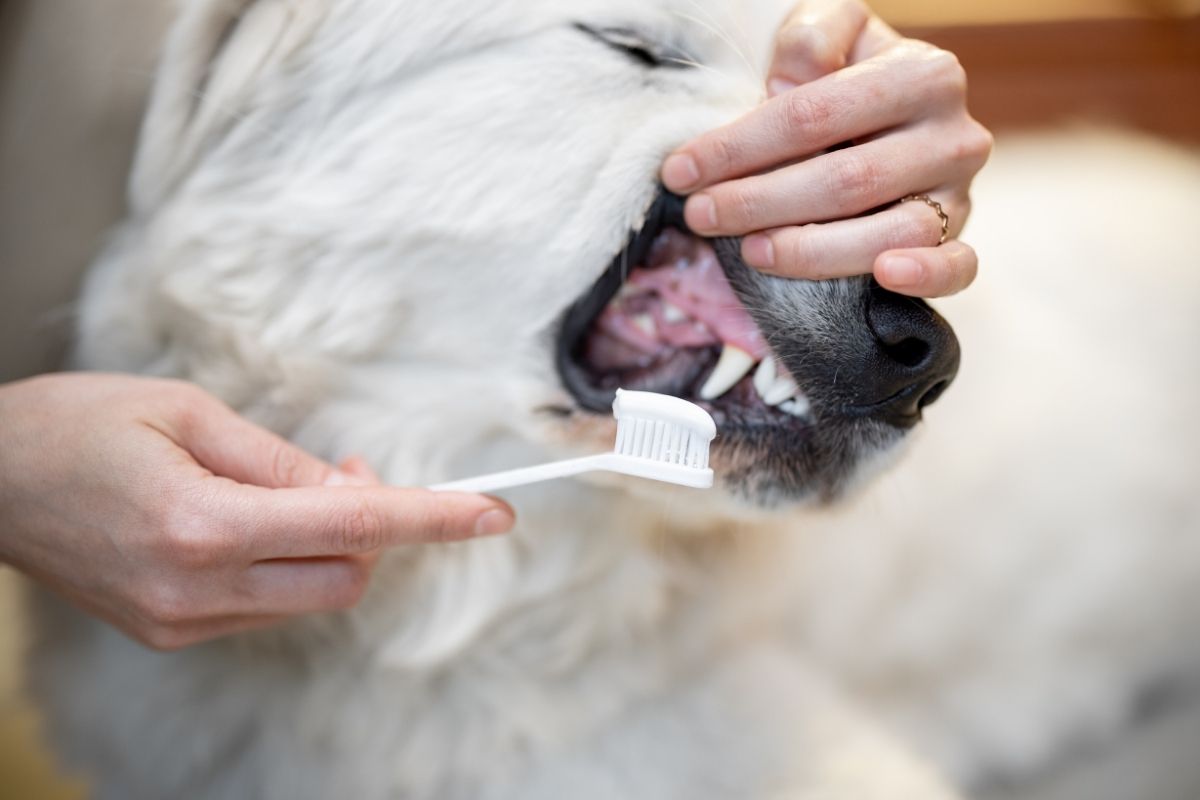
Brushing your dog’s teeth may feel intimidating at first, but with patience and practice, it becomes easier. Follow these simple steps:
1. Choose the Right Tools
Use a dog-specific toothbrush and enzymatic dog toothpaste. Human toothpaste can be harmful to dogs.
2. Start Slowly
Allow your dog to smell and taste the toothpaste before brushing. Gradually introduce the toothbrush.
3. Focus on the Gum Line
Plaque tends to accumulate along the gum line. Use gentle circular motions to clean the teeth effectively.
4. Keep Sessions Short
Start with short brushing sessions and gradually increase the time as your dog becomes more comfortable.
5. Reward Your Dog
Positive reinforcement helps create a good association with brushing.
Consistency and patience are essential when teaching your dog to accept dental care as part of their routine.
Tips to Support Your Dog’s Dental Health
In addition to brushing, several strategies can help maintain your dog’s oral health:
Dental Chews
Specially designed chews help reduce plaque and tartar.
Dental Diets
Certain dog foods are formulated to promote dental health.
Chew Toys
Durable chew toys can help naturally clean teeth while your dog plays.
Regular Veterinary Checkups
Routine exams allow your veterinarian to detect dental issues early and recommend professional cleanings if needed.
Pet owners in Morris, IL, should consider a combination of home dental care and professional guidance to ensure their dog’s mouth stays healthy.
When Professional Dental Cleaning Is Needed
Even with regular brushing, many dogs still need professional dental cleanings at some point in their lives. These cleanings allow veterinarians to remove tartar from areas that brushing cannot reach, including beneath the gum line.
During a professional dental procedure, veterinarians may:
- Remove plaque and tartar buildup
- Examine the teeth and gums for disease
- Take dental X-rays if needed
- Treat or extract damaged teeth
Professional cleanings are an important part of a complete dental care plan for your dog.
Creating a Dental Routine for Your Dog
The best way to protect your dog’s oral health is to make brushing a regular habit. Start slowly, remain consistent, and combine brushing with other dental health strategies.
If you’re unsure about the best dental care routine for your dog, you can schedule your appointment with Lakewood Animal Hospital for professional guidance and dental evaluations.
Frequently Asked Questions:
Q1. What happens if I don’t brush my dog’s teeth?
Ans: Without regular brushing, plaque can turn into tartar, leading to gum disease, tooth loss, and infections that may affect other organs.
Q2. Can I use human toothpaste to brush my dog’s teeth?
Ans: No. Human toothpaste contains ingredients that can be toxic to dogs. Always use toothpaste designed specifically for pets.
Q3. At what age should I start brushing my dog’s teeth?
Ans: You can start brushing your dog’s teeth as early as puppyhood. Early introduction helps dogs become comfortable with the routine.
Q4. Are dental chews a substitute for brushing?
Ans: Dental chews help reduce plaque, but do not replace brushing. The most effective dental routine includes both brushing and regular vet checkups.
Q5. How long should brushing my dog’s teeth take?
Ans: Brushing usually takes 30 seconds to 2 minutes, depending on your dog’s comfort level.
Q6. How often should dogs receive professional dental cleanings?
Ans: Most dogs benefit from professional dental cleanings once a year, although your veterinarian may recommend a different schedule based on your dog’s needs.