


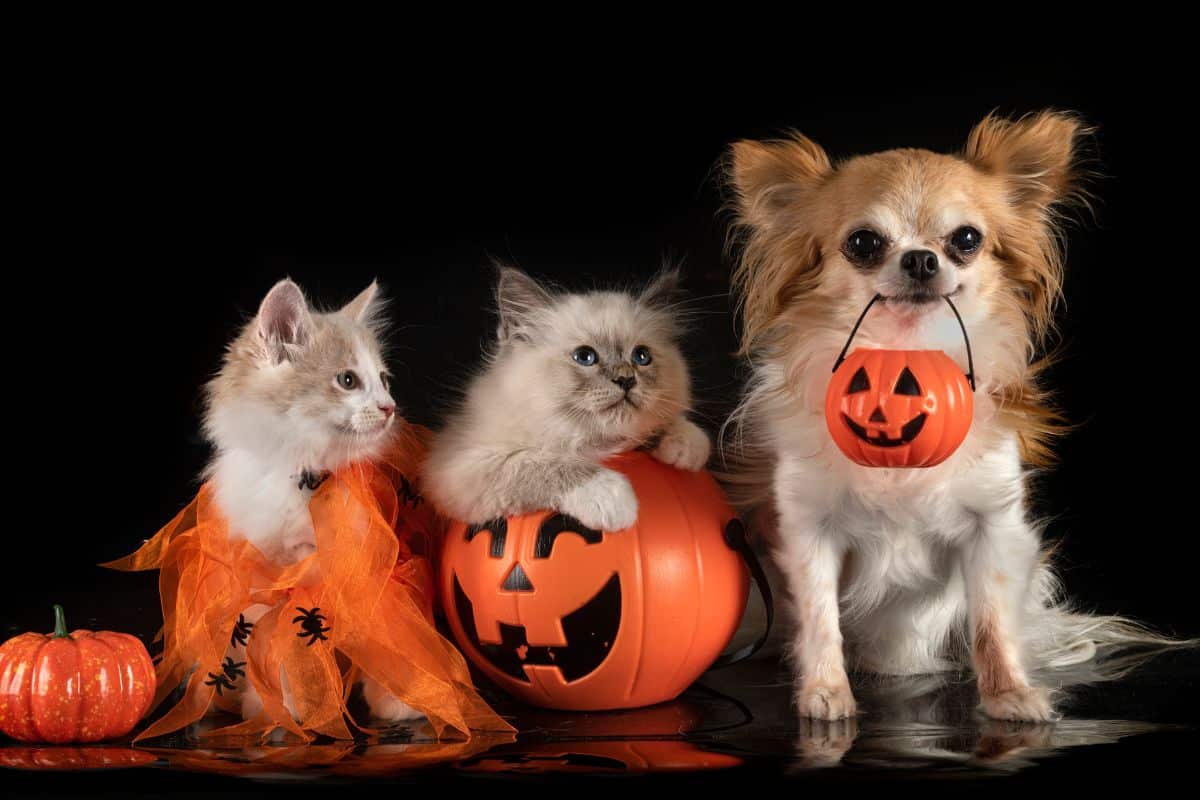
Halloween gives pet owners plenty of reasons to reach for the camera. A dog sitting beside a pumpkin, a cat investigating fall decorations, or a pet wearing a simple Halloween accessory can make a memorable photo.
Your pet does not understand why you want the perfect picture. Costumes, unfamiliar decorations, camera flashes, repeated posing, and excited people can turn a fun photo session into an uncomfortable experience.
The goal should never be getting the picture at any cost. A successful Halloween pet photo is one taken while your pet still feels safe and relaxed.
Here is how Morris pet owners can capture festive photos without making Halloween stressful for their pets.
Why Can Halloween Photo Sessions Be Stressful for Pets?
A Halloween photo setup can look harmless to us but feel very different to a pet. Dogs and cats rely heavily on familiar smells, sounds, surroundings, and routines. Suddenly adding masks, hats, costumes, pumpkins, moving decorations, or bright lights may make some pets cautious.
Your pet may also become uncomfortable when you ask it to sit still repeatedly. A normally patient dog might become restless after several attempts. A cat may simply walk away.
Temperament matters too. Some pets enjoy attention and readily participate. Others dislike clothing, unfamiliar objects, or being handled for long periods.
Instead of expecting your pet to adapt to the photo, adapt the photo session to your pet.
Start With a Setting Your Pet Already Knows
A familiar location can make the entire experience easier. Rather than creating an elaborate Halloween scene somewhere new, consider taking photos in your living room, backyard, porch, or another place where your pet regularly relaxes.
Introduce decorations before you start taking pictures. Give your pet time to sniff and investigate safe props. Keep the setup simple. A few pumpkins, a Halloween blanket, or a seasonal backdrop may provide all the visual interest you need.
Make sure decorations cannot fall onto your pet or be easily chewed and swallowed. Electrical cords, candles, small decorative pieces, and dangling items should remain out of reach.
Let Your Pet Decide Whether a Costume Works
A cute costume does not automatically make a cute photograph. Some pets are comfortable wearing clothing. Others freeze, scratch, hide, struggle, or repeatedly try to remove it.
Start with something simple. A seasonal bandana or lightweight accessory may be easier for a pet to tolerate than a full-body costume. If you use a costume, check the fit before the photo session. Your pet should be able to walk, sit, breathe, see, hear, and move normally. Nothing should press tightly against the neck or chest.
Remove the costume immediately if your pet appears uncomfortable. You can also skip clothing completely. A pet sitting near pumpkins or a Halloween backdrop can create an equally festive photograph.
Learn to Recognize When Your Pet Has Had Enough
Your pet cannot tell you verbally that the photo session is becoming stressful, but body language can say plenty.
Watch for signs such as:
- Turning or moving away
- Repeated lip licking
- Yawning when your pet is not tired
- Flattened or pinned-back ears
- A tucked tail
- Crouching or trying to hide
- Panting without physical exertion
- Trembling
- Repeated attempts to escape
- Growling, hissing, or swatting
- Refusing treats your pet normally enjoys
Do not punish these behaviors. They are information. If your pet starts showing signs of discomfort, stop taking pictures and give them space. You can always try again another day.
Persistent or unusual changes in behavior can sometimes have causes beyond temporary Halloween stress. If you are concerned about a noticeable behavioral or physical change, speaking with a veterinarian in Morris can help determine whether your pet should be examined.
Keep the Photo Session Short
You probably do not need 20 minutes to capture one memorable Halloween picture. Try taking photos for a minute or two, then give your pet a break. A few short attempts are usually easier than one prolonged session.
Have everything ready before bringing your pet into position. Set up your background, adjust your phone or camera, and remove unnecessary distractions first. When your pet arrives, you can concentrate on capturing a few natural moments instead of making them wait while you prepare.
Use Treats Without Turning the Session Into a Battle
Treats can help hold a dog’s attention or reward calm behavior, but they should not be used to pressure a frightened pet into staying in place. Use small pieces of a familiar pet-safe treat. Hold the treat near the camera if you want your pet to look toward the lens.
After taking a few pictures, reward your pet and allow a break. Avoid Halloween candy as a reward. Chocolate and products containing certain ingredients, including xylitol, can be dangerous for pets. Keep candy bowls and treat bags where pets cannot reach them.
If your pet gets into Halloween candy or another potentially harmful substance, contact a veterinary professional promptly rather than waiting for symptoms to appear.
Skip the Flash When Possible
Bright flashes can startle some animals, especially when photographs are taken close to their faces. Natural light is usually a better option. Try taking pictures near a window during the day or outdoors in a safe, familiar area.
If the room is dark, turn on regular household lights instead of repeatedly using a strong flash. You can also use your phone’s burst or live-photo features to capture several frames quickly. This makes it easier to catch a natural expression without repeatedly asking your pet to pose.
Photograph Your Pet Being a Pet
Some of the most appealing Halloween pet photos are not perfectly posed. Let your dog sniff a pumpkin. Photograph your cat looking through Halloween decorations from a comfortable distance. Capture your pet sitting naturally beside a seasonal blanket or toy.
Candid photos often show more personality than a forced pose. This approach can be especially useful for puppies, kittens, senior pets, and animals that dislike being positioned or dressed.
Be Careful With Halloween Props
Before placing anything around your pet, consider whether it could become a chewing, choking, or injury hazard.
Keep these items away from unsupervised pets:
- Lit candles
- Electrical cords
- Small plastic decorations
- Fake cobweb material
- Candy and candy wrappers
- Glow sticks and glow jewelry
- Sharp costume accessories
- Breakable decorations
- Small batteries
- Loose strings and ribbons
Jack-o’-lanterns can make attractive photo props, but use battery-operated lighting rather than an exposed flame when pets are nearby.
Supervise your pet throughout the session and remove the setup when you finish.
What If Your Pet Hates Having Pictures Taken?
That is perfectly fine. Halloween photos are for people. Your pet does not need to participate in costumes or elaborate photo sessions to enjoy time with you.
Try photographing them during an activity they already like. Take a picture during a walk, while they are playing with a favorite toy, or while they are resting near a simple fall decoration.
You could even take the picture without any Halloween props and add a seasonal digital frame afterward. If your pet regularly becomes extremely fearful during unfamiliar situations, discuss the behavior during a veterinary visit. Pet owners searching for a vet near you can ask about appropriate ways to manage fear and stress based on their pet’s individual health, age, and temperament.
Make Halloween Enjoyable Beyond the Camera
Once you have your picture, put the camera away. Give your pet time to return to their normal routine. Remove costumes and accessories, offer fresh water, and provide a quiet place to rest.
Halloween evening can bring additional challenges, including frequent doorbell ringing, strangers in costumes, excited children, and unusual outdoor activity. A pet who tolerated a short photo session may still become overwhelmed later.
Consider keeping nervous pets in a comfortable room away from the front door during trick-or-treating. Make sure dogs are securely leashed when outdoors, and check that identification information is current. Your Halloween photo should become a pleasant memory, not the reason your pet remembers the holiday as stressful.
Keep the Happy in Your Pet’s Halloween
A Halloween photo is worth keeping when the experience behind it is positive too. Watch your pet’s body language, keep costumes comfortable, limit photo sessions, and allow your pet to walk away whenever they have had enough.
When changes in behavior or health leave you wondering whether something more is going on, Lakewood Animal Hospital is here for you. Dr. Michael W. Miller and the veterinary team provide care for a wide range of companion animals, with services spanning routine preventative care through diagnostics and urgent concerns.
For questions about your pet’s health or to request an appointment, contact the hospital at 815-942-1199.
Frequently Asked Questions
1. How long should a Halloween pet photo session last?
Ans: Keep it brief. Start with only a few minutes and watch your pet’s behavior. If your pet remains comfortable, you can continue for a little longer. Stop immediately if you notice fear, frustration, or attempts to leave.
2. Is it safe to put a Halloween costume on my dog or cat?
Ans: It depends on the pet and the costume. Clothing should not restrict breathing, vision, hearing, or movement. Avoid small pieces that could be chewed or swallowed. Never force a costume onto a frightened animal.
3. What should Morris pet owners do if Halloween activities make their pet extremely anxious?
Ans: If your pet shows significant or recurring fear around visitors, noises, costumes, or unfamiliar situations, Lakewood Animal Hospital can evaluate your pet and discuss appropriate ways to support their comfort. The hospital provides preventative and primary veterinary care for pets in Morris.
4. When should unusual behavior after Halloween activities concern me?
Ans: Contact a veterinarian if behavioral changes are severe, persistent, or accompanied by physical symptoms such as vomiting, diarrhea, breathing difficulty, weakness, pain, or loss of appetite. A veterinarian in Morris can examine your pet when a change seems different from their normal response to temporary stress.
5. Can Lakewood Animal Hospital help if my pet gets into Halloween candy or decorations?
Ans: Yes. Lakewood Animal Hospital offers medical, diagnostic, and urgent care services. If your pet consumes something potentially harmful or develops concerning symptoms, contact the hospital promptly for guidance about the appropriate next step.
6. Where can I take my pet for veterinary care in Morris?
Ans: If you are searching for a vet near you in Morris, Lakewood Animal Hospital provides care for dogs, cats, pocket pets, and reptiles. Its services include preventative, diagnostic, surgical, dental, senior, exotic, and urgent care.
Related Articles